Professional Skills Module

Transforming Skills into Success

M S D PERERA | SA NUMBER: SA23643468

This portfolio showcases my journey through the Professional Skills Module, highlighting key concepts from all lectures and demonstrating how I've applied these skills in practical scenarios like the Food Festival project.

12
Lectures Completed
5+
Practical Projects
100%
Skills Applied
M S D Perera

What Are Professional Skills?

Professional skills, also known as soft skills or employability skills, are the non-technical, interpersonal abilities that are essential for success in the workplace. These skills complement an individual's technical knowledge and expertise, making them a well-rounded and valuable asset to employers.

Unlike technical skills, professional skills are transferable and can be applied across various roles and industries. They include:

This module focuses on developing these essential skills through various assignments and activities that prepare students for the professional world.

HTML Basics
1

Professional Skills

Understanding employability skills, values, beliefs, attitudes, and character development.

View Details
CV Writing
2

CV Writing

Learn to create compelling CVs that effectively showcase qualifications and increase job prospects.

View Details
Portfolio Writing
3

Portfolio Writing

Creating professional portfolios to showcase skills, achievements, and career progression.

View Details
Food Festival Discussion
4

Food Festival Discussion

Group formation, menu planning, and initial preparations for our campus food festival event.

View Details
Research Conference
5

Research Conference

Exploring AI, sustainability, and unconventional computing through expert presentations.

View Details
Research Writing
6

Research Writing

Fundamentals of academic research, structuring papers, and proper citation methods.

View Details
Food Festival
7

Food Festival Project

A comprehensive project showcasing web development skills through a food festival website.

View Details
Food Festival
8

Interview Skills

Mastering professional interviews, communication techniques, and effective question handling.

View Details
Email Writing
9

Email Writing

Mastering professional email communication for workplace success and effective correspondence.

View Details
Emotional Intelligence
10

Emotional Intelligence

Understanding and managing emotions for personal and professional success.

View Details
Professional Etiquette
11

Professional Etiquette

Mastering business etiquette, telephone manners, and professional dining protocols.

View Details
Negotiation Skills
12

Negotiation Skills

Learning negotiation techniques through a wedding planning role-play drama.

View Details
Back to Home

What I Learned

Throughout this Professional Skills session, I gained comprehensive understanding of:

Professional Skills Definition

Non-technical, interpersonal abilities essential for workplace success that complement technical knowledge.

Employability Skills

Transferable skills sought by employers including communication, teamwork, problem-solving, and adaptability.

Skills Classification

The distinction between technical skills, soft skills, and transferable skills across various industries.

Essential Workplace Skills

Communication, critical thinking, teamwork, adaptability, time management, and leadership skills.

Values, Beliefs, Attitudes and Character

Values

Core principles that guide behavior and decision-making:

  • Honesty
  • Integrity
  • Respect
  • Responsibility
  • Compassion

Beliefs

Personal assumptions that shape perception:

  • Self-Efficacy
  • Growth Mindset
  • Optimism
  • Self-Worth

Attitudes

Predisposition to respond to situations:

  • Positive Attitude
  • Open-Mindedness
  • Tolerance
  • Confidence
  • Empathy

Character

Moral and ethical qualities:

  • Trustworthiness
  • Respectfulness
  • Responsibility
  • Fairness
  • Courage

Importance of Professional Skills

1

Enhancing Employability

Developing these skills increases chances of securing and excelling in a job.

2

Workplace Success

Professional skills contribute to a productive and harmonious work environment.

3

Career Advancement

Continuous improvement of these skills can lead to promotions and leadership opportunities.

Tips for Developing Professional Skills

Continuous Learning

Seek opportunities to expand knowledge through courses, workshops, and online resources.

Practice & Application

Apply and reinforce your skills in real-life situations whenever possible.

Seek Feedback

Be open to feedback from colleagues, mentors, or supervisors to improve your skills.

Embrace Challenges

Step out of your comfort zone and take on new challenges to enhance your abilities.

Areas for Further Growth

While I've gained a strong foundation in professional skills, I look forward to applying these concepts in practical scenarios throughout the course, particularly during the mock interview and portfolio development phases.
Back to Home

What I Learned About CV Writing

Throughout this CV Writing session, I gained comprehensive knowledge about creating professional and effective CVs:

  • The purpose and importance of a CV in job applications
  • How to structure and format a CV for visual appeal
  • Key components of an effective CV
  • Tailoring CVs for specific job applications
  • The importance of research in CV customization
  • Using action verbs and quantifiable achievements
  • ATS (Applicant Tracking Systems) optimization
  • Common CV mistakes to avoid
  • How to highlight both hard and soft skills effectively
  • The role of a professional summary

This knowledge is crucial for creating CVs that make a positive first impression and increase chances of landing job interviews.

Areas for Improvement in CV Writing

While I've learned the fundamentals of CV writing, I recognize these areas that need further development:

  • Better customization for different industries
  • Improving quantifiable achievements with specific metrics
  • More effective keyword optimization for ATS systems
  • Creating stronger professional summaries
  • Better balancing between conciseness and completeness

For future sessions, I plan to focus on creating industry-specific CV versions and incorporating more data-driven achievements.

My CV

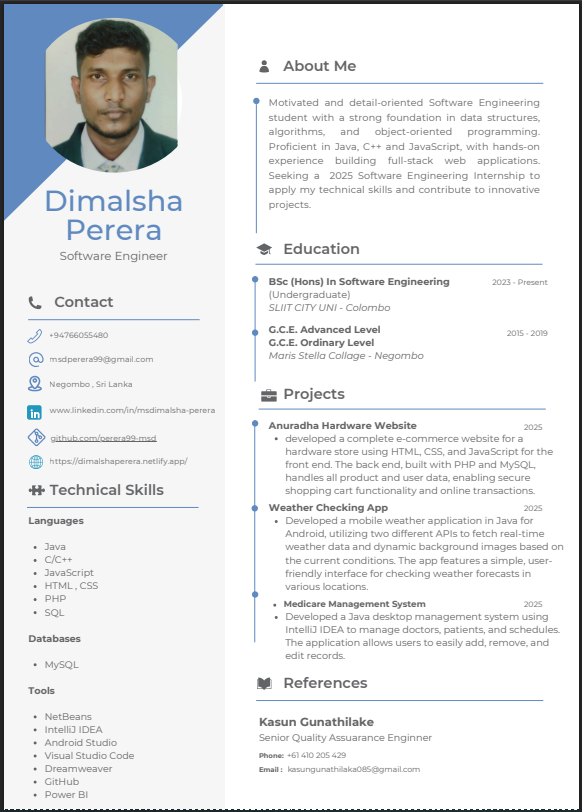
Applying the principles learned in this lecture, I've created a professional CV that highlights my qualifications:

My Curriculum Vitae

My professional CV created after this lecture

CV Highlights

I've applied CV writing principles to create a document that includes:

  • Clean, professional formatting with consistent styling
  • Tailored professional summary focused on web development
  • Quantified achievements using action verbs
  • Relevant skills section with both technical and soft skills
  • Education and project highlights
  • ATS-friendly keywords throughout the document
Download My CV (PDF)

Essential CV Components

Personal Information

Full name, contact details, and optional LinkedIn/profile links

Professional Summary

Concise overview of career goals and key qualifications

Work Experience

Reverse chronological order with achievements and action verbs

Education

Degrees, institutions, and relevant academic achievements

Skills

Both hard and soft skills relevant to the target position

Achievements

Awards, certifications, and other recognitions

CV Writing Best Practices

Target Your CV

Customize your CV for each job application by highlighting relevant skills and experiences.

Quantify Achievements

Use numbers and metrics to demonstrate your impact (e.g., "Increased sales by 25%").

Use Keywords

Incorporate industry-specific keywords to pass through Applicant Tracking Systems.

Keep It Concise

Aim for 1-2 pages maximum, focusing on the most relevant information.

Powerful Action Verbs for CVs

Leadership & Management

Directed Managed Supervised Led Coordinated

Achievement & Results

Achieved Increased Improved Generated Reduced

Technical Skills

Developed Designed Programmed Implemented Optimized
Back to Home

What I Learned

Throughout this Portfolio Writing session, I gained comprehensive understanding of:

Portfolio Types

Different portfolio types including personal, career, employment, and assessment portfolios.

Purpose Definition

How to define the primary purpose of a portfolio based on career goals and target audience.

Content Organization

Structuring portfolios logically with clear sections and providing context for each item.

Digital Platforms

Various online platforms like LinkedIn, Behance, GitHub Pages for creating digital portfolios.

Portfolio Types

Personal Portfolio

Collection of creative work, achievements, and projects showcasing skills and interests:

  • Used in creative fields
  • Shows unique style
  • Expresses creative abilities

Career Portfolio

Presents professional achievements and credentials:

  • Includes resume, cover letter
  • Reference letters
  • Work experience documentation

Employment Portfolio

Comprehensive collection of work-related documents:

  • Work samples
  • Performance evaluations
  • Training certificates

Assessment Portfolio

Shows learning progress and achievements over time:

  • Used in educational settings
  • Demonstrates subject understanding
  • Evaluates academic progress

Portfolio Creation Steps

1

Define Purpose

Determine if it's for academic purposes, job applications, or personal development.

2

Identify Audience

Tailor content and presentation to meet reviewer expectations.

3

Choose Format

Decide between physical (printed) or digital (website, PDF) format.

4

Collect Materials

Gather documents, artifacts, and evidence of skills and accomplishments.

5

Organize Content

Structure with clear sections: introduction, resume, achievements, projects, etc.

My Professional Portfolio

Applying the principles learned in this lecture, I've created a professional portfolio:

Portfolio Highlights

I've applied portfolio writing principles to create a comprehensive showcase of my skills:

  • Clean, professional design with intuitive navigation
  • Showcase of web development projects with code samples
  • Detailed information about my skills and competencies
  • Professional background and education history
  • Contact information and social media links
View My Portfolio

Portfolio Preview

My professional portfolio created after this lecture

Areas for Improvement

While I've learned the fundamentals of portfolio creation, I recognize these areas that need further development:

  • Better organization of project case studies with more detailed outcomes
  • Incorporating more client testimonials and recommendations
  • Adding video introductions or project demonstrations
  • Improving SEO optimization for better visibility
  • Creating specialized portfolio versions for different job types

For future development, I plan to focus on creating more interactive elements and regularly updating my portfolio with new projects.

Online Portfolio Platforms

LinkedIn

Professional networking platform with portfolio features

Behance

Platform for creative professionals to showcase work

GitHub Pages

Free hosting for developers to showcase coding projects

Adobe Portfolio

Integrated with Creative Cloud for creative professionals

Back to Home

Session Overview

In this practical session, we began planning for our upcoming campus food festival. This was our first step in turning theory into practice - moving from individual learning to collaborative project work.

Group Formation

We formed a 15-member team to organize our food stall

Leadership Selection

Appointed a group leader to coordinate our efforts

Menu Planning

Brainstormed and selected 7 food items for our stall

Visual Planning

Displayed our menu ideas on the classroom whiteboard

Forming Our Team

Team Assembly

We came together as a 15-person team, bringing diverse skills and perspectives. It was interesting to see how classmates I'd only known briefly became collaborators.

Choosing a Leader

After some discussion, we appointed a group leader who would be responsible for coordinating our efforts and communicating with instructors.

Initial Role Discussion

We began talking about how to divide responsibilities - who would handle food preparation, decoration, sales, and cleanup.

Planning Our Menu

The most exciting part was deciding what food items we would offer. After much discussion, we settled on 7 diverse options:

We considered factors like preparation time, cost, popularity, and dietary preferences when selecting our menu items.

Learning from Previous Festivals

Our instructor shared insights from previous years' food festivals, highlighting what worked well and common challenges:

Time Management

Previous groups emphasized the importance of starting preparations early and having a clear timeline.

Budget Considerations

We learned about cost management and pricing strategies that had worked for past teams.

Food Safety

Important reminders about hygiene practices and proper food handling during the event.

Visualizing Our Plan

We transferred our ideas to the classroom whiteboard, creating a visual representation of our food stall concept. This included:

  • Our selected 7 food items with brief descriptions
  • Potential pricing for each item
  • Initial thoughts on stall decoration themes
  • A basic workflow for food preparation and service

Seeing everything written out helped us identify potential issues and opportunities we hadn't considered during our verbal discussion.

Our Whiteboard Plan

Personal Reflection

This session felt different from our previous lectures - it was more hands-on and collaborative. I enjoyed the energy in the room as we debated menu options and started imagining our food stall. It was challenging to coordinate ideas among 15 people, but our group leader did a good job keeping us focused. I'm looking forward to seeing how our plans translate into an actual event.

- Personal Reflection

Key Takeaways from This Session:

  • Effective collaboration requires clear communication and leadership
  • Group decision-making involves compromise and consideration of multiple perspectives
  • Visual planning tools like whiteboards can make abstract ideas more concrete
  • Learning from others' experiences provides valuable practical insights

Next Steps

This discussion session was just the beginning. Our next steps include:

1

Detailed Planning

Creating a comprehensive plan with assigned responsibilities, budget, and timeline

2

Preparation

Sourcing ingredients, preparing decorations, and organizing equipment

3

Execution

Setting up our stall and managing operations during the actual food festival

Back to Home

Session Overview

This session featured a research conference with presentations from three distinguished speakers exploring the intersection of technology, AI, and sustainability. The conference highlighted how emerging technologies are addressing global challenges and shaping our future.

AI Applications

Exploring how AI is solving real-world problems in agriculture, healthcare, and education

Sustainable Solutions

Understanding how technology can drive sustainability while maintaining profitability

Future Computing

Discovering unconventional computing methods inspired by biological systems

Speaker 1: Using AI and Technology to Confront Global Challenges

Prof. Mahesha Kapurubandara

Pro Vice-Chancellor, SLIIT International

Key Insights:

  • The planet faces critical issues including climate disruption, inequality, resource depletion, and excessive waste
  • The younger generation is uniquely positioned to make a difference through digital skills, innovation, and collaboration
  • AI plays a key role in resolving complex problems across various sectors
  • Technological solutions are already making significant impacts in Sri Lanka and neighboring regions

Notable Data Points:

60%
of students expressed interest in careers merging AI and sustainability (2023 study)
15%
rise in crop output in Sri Lankan agriculture due to AI (2024)
20%
reduction in water usage through AI-guided irrigation systems

"You don't need to wait for tomorrow—you're already making a difference today."

Speaker 2: AI, Capitalism, and a Sustainable Future

Mr. Kalana Muthumuni

CEO and Co-Founder, Hyperglade

Key Insights:

  • AI has the power to align profit-making with environmental and social values
  • Companies can be both profitable and responsible by adopting AI-led strategies
  • Intelligent systems help minimize waste, reduce costs, and improve performance while meeting sustainability goals
  • The traditional profit-first business model is shifting with the help of AI

Business Case Studies:

Bee Works

Despite billion-dollar valuation, failed due to financial mismanagement

Delma

Contributes 15% of profits to support community initiatives

"Success isn't about speed—it's about purpose and impact."

Speaker 3: Innovations in Biological and Unconventional Computing

Dr. Edward Braund

Head of Computer Science, University of Bedfordshire

Key Insights:

  • Unconventional computing explores alternative methods beyond classic systems, using organic and chemical models
  • Biological systems have the ability to adapt, heal, and sustain themselves—making them ideal for future computing needs
  • Early lab experiments have shown promising functionality and potential for real-world use
  • These ideas are evolving from theory into application

Research Highlights:

Physarum Polycephalum

Slime mold that can solve complex tasks by mimicking intelligence

Organic Integration

Integration of sensors and actuators into organic systems boosts processing capabilities

Musical Encoding

Encoding musical notes using voltage patterns—a step toward unconventional data processing

"Nature-based computing is paving a path to more efficient and eco-friendly technology."

Key Takeaways

Versatile Role of AI

The conference demonstrated how AI is influencing everything from social justice to business and science, showing its potential across diverse domains.

Sustainability with Progress

Advancements in technology are not a threat to the environment—they can enhance sustainability when applied thoughtfully.

Next-Gen Computing

We are stepping beyond traditional computing into innovative fields like biological systems, opening new possibilities for sustainable technology.

Personal Reflection

This research conference provided valuable insights into how technology, particularly AI, is being applied to address real-world challenges. The presentations highlighted that technological advancement and sustainability are not mutually exclusive but can be powerful allies. I was particularly fascinated by the concept of biological computing, which represents a paradigm shift in how we think about information processing. The conference emphasized that as future professionals, we have both the opportunity and responsibility to leverage technology for positive impact.

Main Learnings:

  • AI applications extend far beyond commercial uses to address critical global challenges
  • Business models are evolving to incorporate sustainability as a core value rather than an afterthought
  • Unconventional computing approaches may offer more sustainable alternatives to traditional silicon-based systems
  • The younger generation has a crucial role to play in shaping technology's ethical and sustainable application
Back to Home

What I Learned

This lecture introduced the basics of academic research writing:

Research Process

Understanding the systematic approach to conducting academic research.

Paper Structure

Learning the standard components of research papers and reports.

Citation Methods

Introduction to proper citation styles and avoiding plagiarism.

Academic Tone

Developing appropriate writing style for academic contexts.

Areas for Improvement

Since I don't have detailed notes from this lecture, I need to focus on:

  • Reviewing the specific research methodologies covered
  • Practicing different citation styles (APA, MLA, Chicago)
  • Understanding how to structure complex research arguments
  • Learning to evaluate source credibility effectively

I plan to revisit these concepts when I need to write academic papers in future courses.

Key Research Concepts

Research Proposal

Planning and outlining research objectives and methodology:

  • Defining research questions
  • Literature review process
  • Methodology selection

Data Analysis

Interpreting research findings and drawing conclusions:

  • Qualitative vs quantitative methods
  • Statistical analysis basics
  • Results interpretation

Personal Reflection

I remember this lecture covering the importance of proper research methodology and academic integrity. While I don't have detailed notes, I understand that research writing is a crucial skill for academic success. I need to make sure I review these concepts more thoroughly when I undertake research projects in the future.

Back to Home
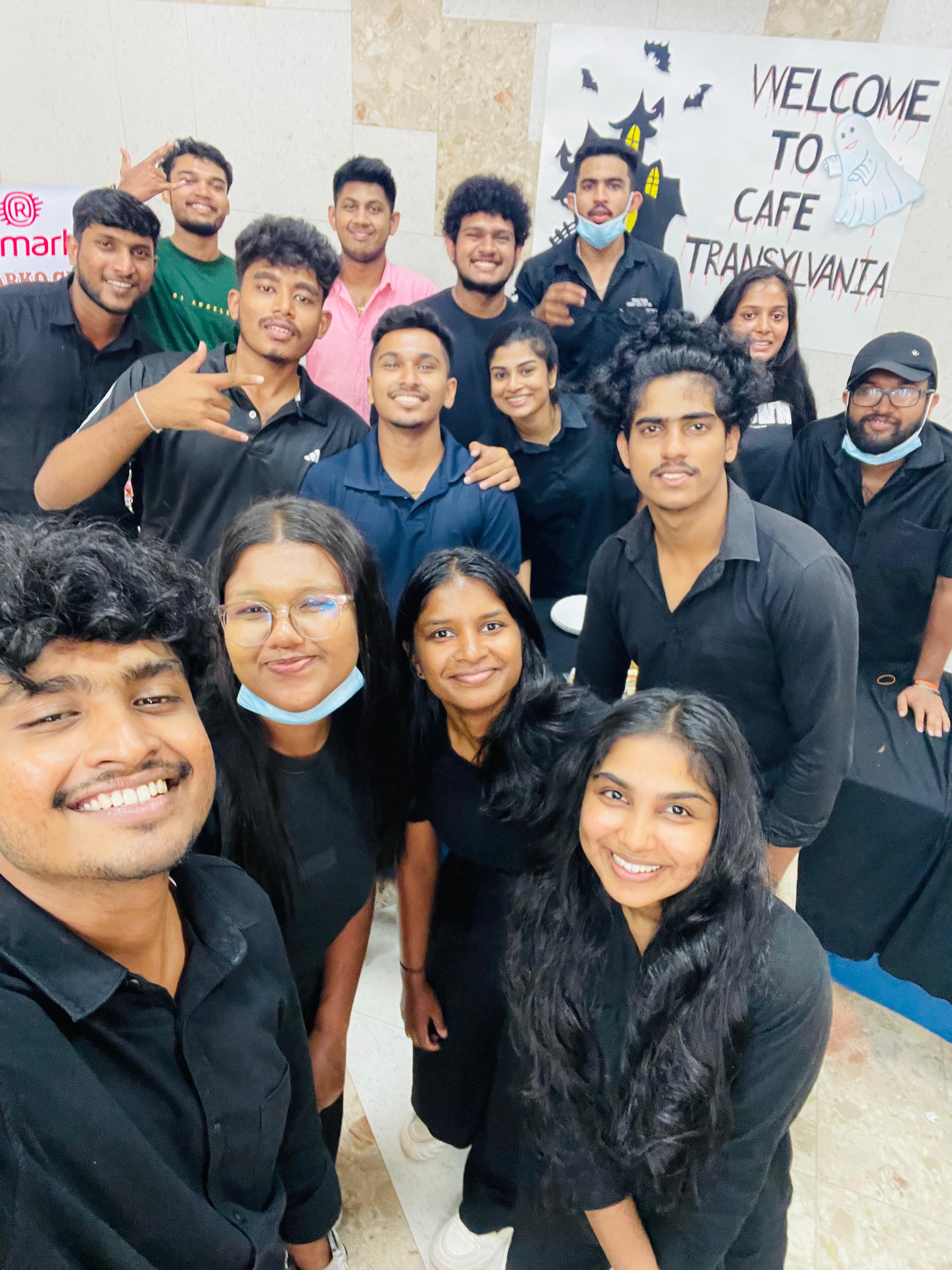
Cafe Transylvania Team

Cafe Transylvania

Our monstrously delicious food stall

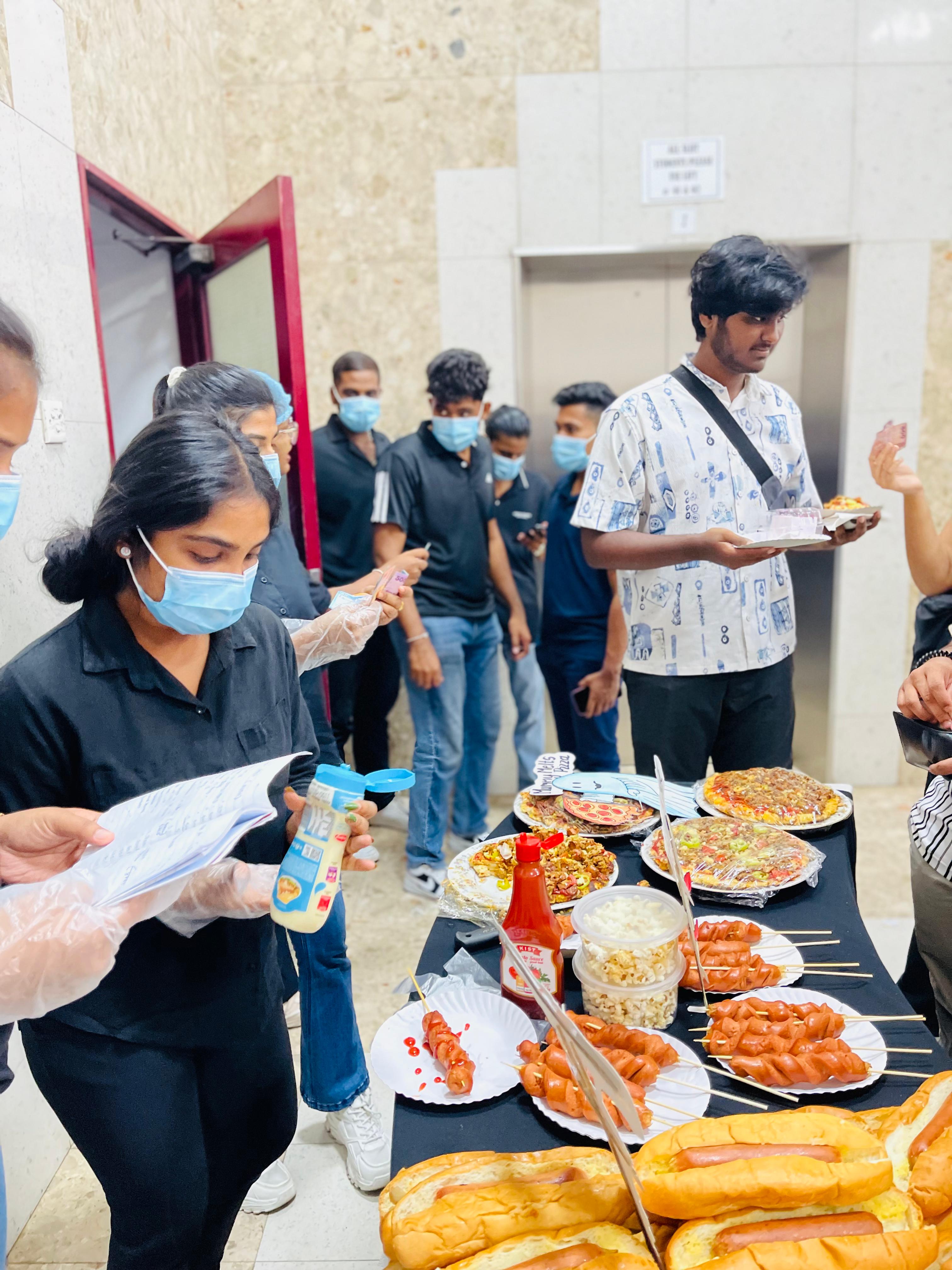
Team Preparation

Team Preparation

Working together to create something special

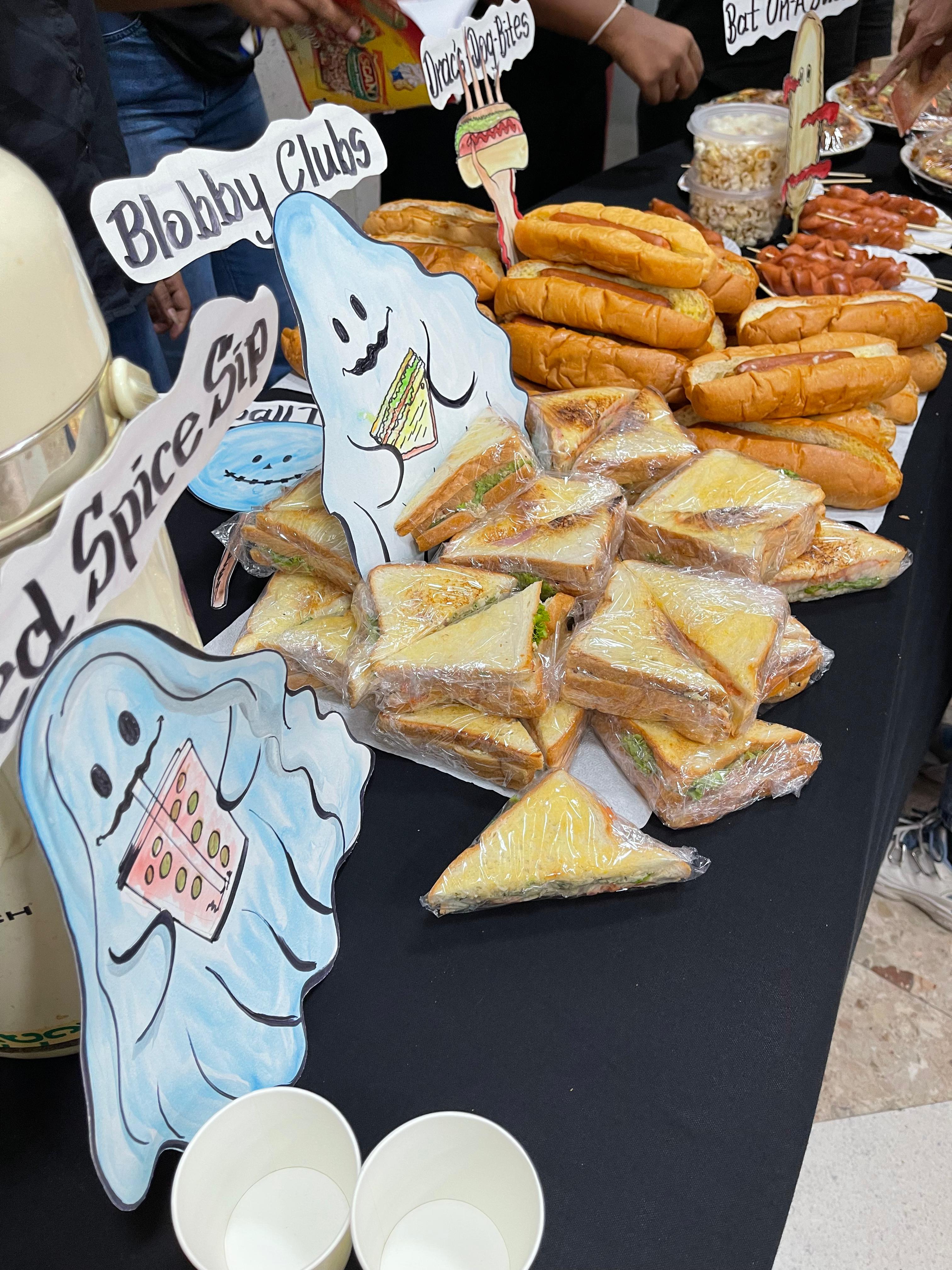
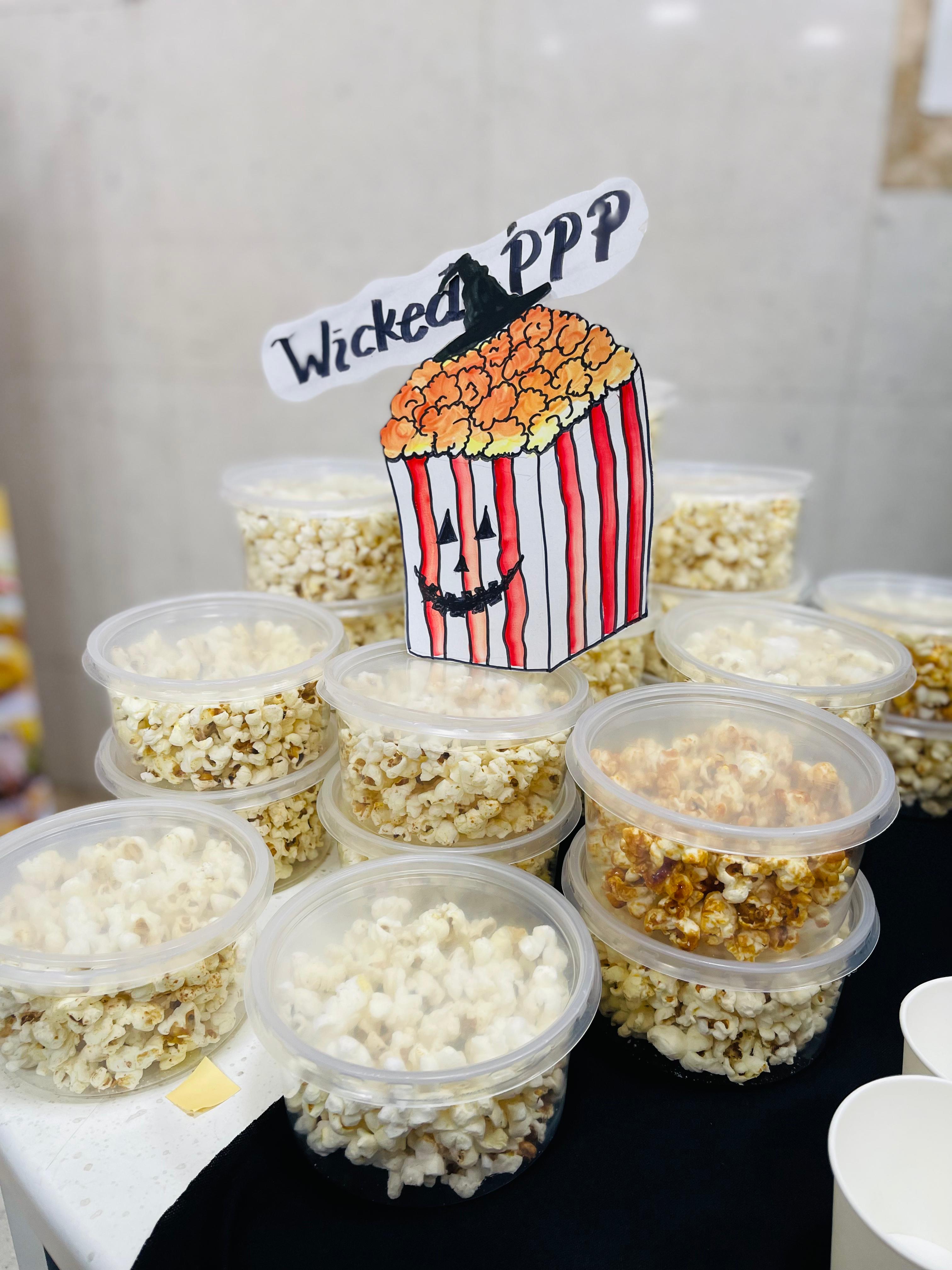
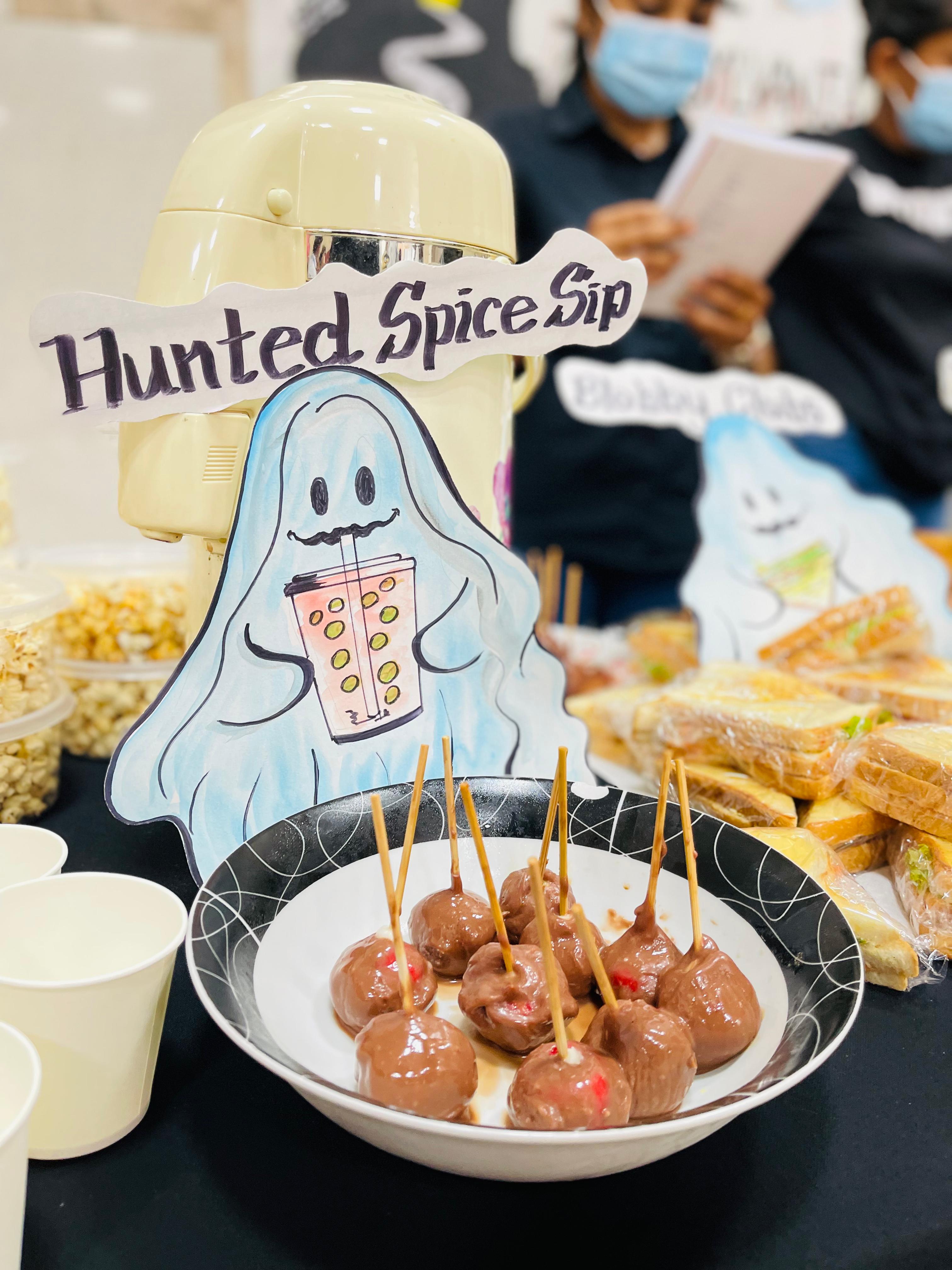
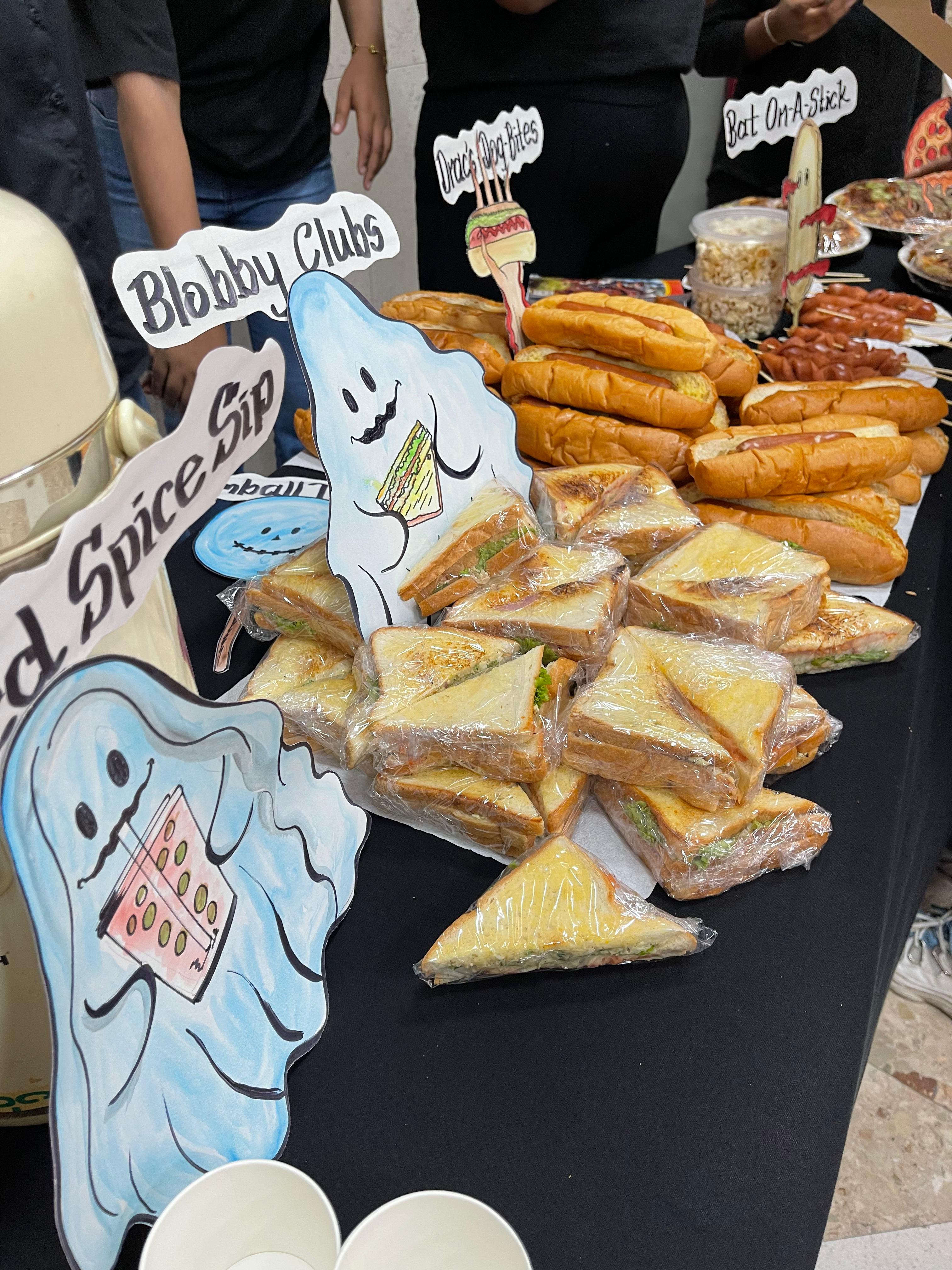
Food Display

Delicious Creations

Our Hotel Transylvania themed menu items

Happy Customers

Happy Customers

Serving smiles with every bite

Project Overview

The Food Festival was the culmination of our Professional Skills module, where we transformed theoretical knowledge into practical experience. Our team of 15 members created "Cafe Transylvania," a food stall inspired by the Hotel Transylvania film franchise, complete with themed decorations and creatively named menu items.

80%
Food Sold
15
Team Members
7
Menu Items
100%
Team Spirit

Our Theme: Hotel Transylvania

We drew inspiration from the beloved Hotel Transylvania films to create a fun, spooky, and family-friendly atmosphere. Our decorations featured classic monster motifs with a playful twist, and our menu items were creatively named after characters and elements from the movies.

Spooky Decor

Classic monster themes with colorful, friendly aesthetics

Creative Naming

Menu items named after characters and elements from the films

Playful Atmosphere

Friendly monsters and magical elements throughout

Our Monster Menu

Each menu item was carefully crafted and named to fit our Hotel Transylvania theme:

Teamwork & Preparation

Our success was built on exceptional teamwork and careful preparation. We divided into two specialized teams to maximize efficiency:

Day Before Festival: Team Division

We strategically divided our 15-member team into two specialized groups:

Food Preparation Team

Worked through the night to prepare all our menu items with care and attention to quality

Decoration Team

Created our spectacular Hotel Transylvania themed decorations and stall setup

Festival Day: United Front

On the day of the festival, both teams came together seamlessly to:

  • Set up our visually striking stall with themed decorations
  • Prepare final food items with fresh ingredients
  • Manage customer service with enthusiasm and efficiency
  • Handle sales and maintain food quality throughout the event

"The collaboration between our two teams was flawless. While the food team worked through the night preparing delicious items, the decoration team transformed our space into a magical monster hotel. On festival day, we came together as one united team, and that's why we achieved such tremendous success."

- Team Leader Reflection

Our Success Story

80% Sold Out

We sold nearly all of our prepared food, a testament to both quality and popularity

Customer Satisfaction

Positive feedback on both food quality and our creative theme implementation

Team Cohesion

Exceptional collaboration between all 15 team members throughout the process

Creative Execution

Successfully brought our Hotel Transylvania theme to life in both food and decor

Photo Gallery

Memories from our incredible Cafe Transylvania experience:

Lessons Learned

Team Coordination

Dividing tasks based on strengths and maintaining clear communication channels

Time Management

Planning preparation schedules to ensure everything was ready for the event

Quality Control

Maintaining food quality and presentation standards throughout the festival

Customer Service

Engaging with customers enthusiastically while managing operations efficiently

The Cafe Transylvania food festival project was more than just a culinary exercise—it was a comprehensive demonstration of professional skills in action. From initial planning to execution, our team showcased collaboration, creativity, and commitment to excellence. Selling 80% of our food was a tangible measure of our success, but the intangible rewards of teamwork and shared accomplishment were even more valuable.

Back to Home

What I Learned

This session provided comprehensive training on professional interview techniques and communication skills essential for career success:

Interview Preparation

Researching companies, understanding job requirements, and preparing relevant questions.

Communication Skills

Verbal and non-verbal communication techniques for effective interviews.

Question Handling

Strategies for answering common and challenging interview questions confidently.

Professional Etiquette

Appropriate behavior, dress code, and follow-up procedures after interviews.

Interview Preparation

1

Research the Company

Understand the organization's mission, values, culture, and recent achievements.

  • Review company website and social media
  • Study recent news and press releases
  • Understand the industry position and competitors
2

Analyze the Job Description

Identify key requirements and align your skills and experience accordingly.

  • Highlight required skills and qualifications
  • Prepare examples demonstrating relevant experience
  • Understand the role's responsibilities and expectations
3

Prepare Your Materials

Organize all necessary documents and information for the interview.

  • Bring multiple copies of your CV
  • Prepare your portfolio or work samples
  • Have references and certificates ready
4

Practice Common Questions

Rehearse answers to frequently asked interview questions.

  • "Tell me about yourself"
  • "What are your strengths and weaknesses?"
  • "Why do you want to work here?"
  • "Where do you see yourself in 5 years?"

Communication Techniques

Non-Verbal Communication

Body language speaks volumes during interviews:

  • Maintain appropriate eye contact
  • Use confident posture and gestures
  • Offer a firm handshake
  • Smile and show enthusiasm

Active Listening

Demonstrate engagement and understanding:

  • Listen carefully to questions before answering
  • Ask clarifying questions when needed
  • Nod and provide verbal cues of understanding
  • Avoid interrupting the interviewer

STAR Method

Structured approach to behavioral questions:

  • Situation: Describe the context
  • Task: Explain your responsibility
  • Action: Describe what you did
  • Result: Share the outcome

Verbal Delivery

Effective speaking techniques:

  • Speak clearly and at a moderate pace
  • Use professional vocabulary
  • Avoid filler words ("um", "like", "you know")
  • Modulate tone to show enthusiasm

Common Interview Questions & Strategies

"Tell me about yourself"

Introduction

Strategy: Provide a concise professional summary focusing on relevant experience and skills.

Example: "I'm a web developer with 2 years of experience specializing in front-end technologies. I recently completed a project where I improved website performance by 30%."

"What are your strengths?"

Self-Assessment

Strategy: Highlight 2-3 strengths relevant to the position with specific examples.

Example: "My key strength is problem-solving. In my previous role, I developed a system that reduced processing time by 25%."

"What is your greatest weakness?"

Self-Awareness

Strategy: Mention a real but minor weakness and explain how you're working to improve it.

Example: "I sometimes focus too much on details. I've learned to balance perfectionism with efficiency by setting time limits for tasks."

"Why should we hire you?"

Value Proposition

Strategy: Connect your skills and experience directly to the company's needs.

Example: "My experience in developing responsive web applications aligns perfectly with your need for mobile optimization. I can help improve user engagement from day one."

"Where do you see yourself in 5 years?"

Career Goals

Strategy: Show ambition while demonstrating commitment to the company.

Example: "I see myself growing with the company, potentially in a leadership role where I can mentor others while continuing to contribute to key projects."

"Do you have any questions for us?"

Engagement

Strategy: Prepare thoughtful questions that show your interest and research.

Example Questions:

  • "What do you enjoy most about working here?"
  • "What are the biggest challenges facing this department?"
  • "How does the company support professional development?"

Mock Interview Experience

As part of this session, we participated in mock interviews to practice our skills in a realistic setting:

Professional Setting

Simulated real interview environment with industry professionals

Constructive Feedback

Received detailed feedback on performance and areas for improvement

Skill Development

Identified strengths and weaknesses in interview technique

The mock interview was an invaluable experience that highlighted areas I need to work on, particularly in structuring my answers more effectively. Receiving immediate feedback helped me understand how interviewers perceive responses and what makes a candidate stand out.

- Personal Reflection

Post-Interview Strategies

Immediate Follow-up

Send a thank-you email within 24 hours expressing appreciation and reiterating interest.

Self-Evaluation

Reflect on your performance, noting what went well and areas for improvement.

Patience & Follow-up

Wait for the agreed timeline before following up, and do so professionally.

Continuous Improvement

Use each interview as a learning experience, regardless of the outcome.

Sample Thank-You Email Template:

Key Takeaways

1

Preparation is Crucial

Thorough research and practice significantly increase confidence and performance.

2

Communication is Multidimensional

Both verbal and non-verbal cues contribute to the overall impression.

3

Authenticity Matters

While preparation is important, being genuine creates a more memorable impression.

4

Every Interview is a Learning Opportunity

Regardless of outcome, each interview provides valuable experience.

Areas for Further Development

While I've gained valuable interview skills through this session, I recognize these areas that need ongoing practice:

  • Handling unexpected or curveball questions more smoothly
  • Improving my storytelling technique for behavioral questions
  • Managing interview anxiety in high-pressure situations
  • Developing more concise answers to avoid rambling
  • Better research on company-specific challenges and opportunities

I plan to continue practicing with mock interviews and seeking feedback to refine these skills further.

Back to Home

What I Learned

This session provided comprehensive training on professional email writing techniques essential for effective workplace communication:

Email Structure

Proper formatting with clear subject lines, salutations, body content, and closings.

Professional Tone

Adapting language and style for different recipients and purposes.

Purpose Clarity

Ensuring emails have clear objectives and call-to-action statements.

Common Mistakes

Identifying and avoiding frequent email writing errors.

Professional Email Structure

Common Email Types & Templates

Email Etiquette & Best Practices

Do: Proofread Carefully

Check for spelling, grammar, and clarity before sending.

Don't: Use Overly Casual Language

Avoid slang, excessive emojis, or inappropriate humor.

Do: Use Descriptive Subject Lines

Help recipients prioritize and understand email content.

Don't: CC Unnecessarily

Only include people who need to be in the conversation.

Do: Respond Promptly

Acknowledge receipt within 24 hours, even if full response takes longer.

Don't: Write Overly Long Emails

Be concise; if content is extensive, consider a meeting instead.

Practical Exercise

During this session, we practiced writing different types of professional emails:

  • Job application emails with tailored cover letters
  • Meeting request emails with clear agendas
  • Follow-up emails after interviews or meetings
  • Inquiry emails requesting information or clarification

We received feedback on our email structure, tone, and effectiveness.

Key Takeaways

1

First Impressions Matter

Professional emails create positive impressions and demonstrate attention to detail.

2

Clarity Over Creativity

Clear, straightforward communication is more effective than elaborate writing.

3

Tone Adaptation

Adjust formality based on recipient and context while maintaining professionalism.

4

Proofreading is Essential

Errors undermine credibility; always review before sending.

Personal Reflection

This email writing session was particularly valuable as it addressed a skill I'll use daily in my professional career. I learned that effective email communication involves more than just conveying information—it's about building relationships and demonstrating professionalism. The practical exercises helped me understand how to adapt my tone for different situations and recipients. I now feel more confident in my ability to write clear, professional emails that make positive impressions.

Areas for Continued Practice:

  • Writing more concise subject lines that capture attention
  • Improving my ability to anticipate reader questions
  • Developing better templates for frequently sent email types
  • Enhancing my proofreading skills to catch subtle errors
Back to Home

Session Overview

This session on Emotional Intelligence was conducted by a visiting lecturer from Nepal who specializes in psychology and personal development. The lecture focused on understanding emotions, developing self-awareness, and applying emotional intelligence in professional settings.

Expert Guidance

Specialized session led by an international psychology expert

Emotional Awareness

Understanding the role of emotions in decision-making and relationships

Practical Application

Simple exercise to identify and reflect on current emotional challenges

What I Learned

This Emotional Intelligence session provided valuable insights into understanding and managing emotions effectively:

Self-Awareness

Recognizing and understanding our own emotions and their impact on thoughts and behavior.

Self-Regulation

Managing disruptive emotions and impulses, and adapting to changing circumstances.

Motivation

Harnessing emotions to pursue goals with energy and persistence.

Empathy

Understanding the emotional makeup of other people and treating them accordingly.

Social Skills

Managing relationships to move people in desired directions through effective communication.

Components of Emotional Intelligence

Personal Competence

Self-Awareness

Emotional self-awareness, accurate self-assessment, self-confidence

Self-Regulation

Self-control, trustworthiness, conscientiousness, adaptability

Motivation

Achievement drive, commitment, initiative, optimism

Social Competence

Empathy

Understanding others, developing others, service orientation

Social Skills

Influence, communication, conflict management, leadership

Practical Exercise: Emotional Reflection

The lecturer conducted a simple but powerful exercise where we were asked to write about our current emotional challenges:

1

Identify Current Emotions

Reflect on what emotions we were currently experiencing in our personal and academic lives.

2

Analyze Triggers

Identify what situations or thoughts were triggering these emotional responses.

3

Develop Coping Strategies

Brainstorm healthy ways to manage these emotions effectively.

My Emotional Reflection:

Current Emotional Challenge: Anxiety about upcoming final exams and project deadlines

Triggers: Heavy workload, time pressure, fear of underperforming

Physical Symptoms: Difficulty sleeping, loss of appetite, tension headaches

Coping Strategy: Creating a detailed study schedule, practicing mindfulness meditation, taking regular breaks, talking to classmates about shared concerns

Benefits of Emotional Intelligence

Professional Success

EI is a stronger predictor of workplace success than IQ in many roles

Mental Health

Better emotional regulation reduces stress and improves overall wellbeing

Relationship Quality

Improved communication and empathy strengthen personal and professional relationships

Decision Making

Emotionally intelligent individuals make more balanced and effective decisions

Developing Emotional Intelligence

Keep an Emotion Journal

Regularly record your emotional experiences, triggers, and responses to identify patterns.

Practice the Pause

When feeling strong emotions, take a moment before reacting to choose a thoughtful response.

Develop Perspective-Taking

Regularly try to see situations from others' viewpoints to build empathy.

Seek Feedback

Ask trusted friends or colleagues how they perceive your emotional responses.

Emotional Intelligence in the Workplace

Scenario: Handling Criticism

Low EI Response

Reaction: Defensive, argumentative, blaming others

Outcome: Damaged relationships, missed learning opportunity

Scenario: Handling Criticism

High EI Response

Reaction: Listens actively, seeks clarification, reflects on feedback

Outcome: Professional growth, strengthened relationships

EI in Leadership

Leaders with high emotional intelligence create more positive work environments, handle conflicts effectively, and inspire higher performance in their teams. They're better at recognizing team members' emotional states and responding appropriately.

Personal Reflection

This session on Emotional Intelligence was particularly impactful because it addressed something we all experience but rarely discuss openly - our emotional challenges. The visiting lecturer from Nepal created a safe space where we could honestly reflect on our current emotional states. The simple exercise of writing about our emotional problems helped me realize that many of my classmates were experiencing similar anxieties about academics and future careers. This session emphasized that emotional intelligence isn't about suppressing emotions but understanding and managing them effectively. I've started applying some of the techniques, particularly the 'pause before reacting' strategy, and have noticed improvements in how I handle stressful situations.

Key Insights from This Session:

  • Emotional intelligence is a learnable skill, not an innate trait
  • Recognizing and naming emotions is the first step toward managing them
  • High EI contributes more to career success than technical skills alone
  • Creating space between emotion and reaction leads to better outcomes
  • Vulnerability and emotional awareness can strengthen team dynamics

My Emotional Intelligence Action Plan

Daily Practice

Spend 5 minutes each morning identifying potential emotional triggers for the day

Emotion Journal

Maintain a weekly journal tracking emotional responses and their outcomes

Mindfulness Practice

Incorporate 10 minutes of mindfulness meditation into daily routine

Feedback Seeking

Quarterly check-ins with trusted peers about emotional intelligence growth

Back to Home

What I Learned

This comprehensive session covered essential etiquette skills for professional environments:

Professional Etiquette

Business protocols, introductions, and professional conduct in workplace settings.

Telephone Etiquette

Effective phone communication, proper greetings, and professional call handling.

Dining Etiquette

Business dining protocols, table manners, and networking during meals.

Business Attire

Appropriate dress codes for different professional situations and cultures.

Professional Etiquette

1

Introductions & Greetings

Proper protocols for meeting colleagues, clients, and superiors:

  • Stand when being introduced to someone
  • Make eye contact and offer a firm handshake
  • Repeat the person's name when greeting them
  • Introduce junior personnel to senior personnel first
2

Business Card Exchange

Proper handling and presentation of business cards:

  • Present your card with the text facing the recipient
  • Receive cards with both hands and study them briefly
  • Never write on someone's card in their presence
  • Keep cards in a proper card holder, not loose in pockets
3

Office Protocol

Professional conduct in workplace settings:

  • Respect personal space and privacy
  • Knock before entering offices
  • Keep common areas clean and organized
  • Be punctual for meetings and appointments

Telephone Etiquette

Answering Calls

Professional call answering techniques:

  • Answer within 3 rings whenever possible
  • Identify yourself and your department
  • Speak clearly and with a smile in your voice
  • Keep a notepad handy for taking messages

Ending Calls

Proper call conclusion protocols:

  • Summarize action items before ending
  • Thank the caller for their time
  • Let the caller hang up first
  • Follow up on promises made during the call

Mobile Phone Etiquette

Appropriate mobile phone use in professional settings:

  • Silence phones during meetings and presentations
  • Step away for personal calls
  • Avoid using phones during meals with colleagues
  • Be mindful of volume in public spaces

Professional Phone Script Example:

Answering: "Good morning, [Company Name], this is [Your Name] speaking. How may I help you?"

Transferring: "Certainly, let me transfer you to [Department/Person]. May I ask who's calling?"

Taking Messages: "I'm sorry, [Person] is unavailable at the moment. May I take a message?"

Dining Etiquette

Table Setting Knowledge

Understanding formal table settings:

  • Work your way from the outside in with utensils
  • Bread plate is on your left, drinks on your right
  • Napkin on lap shortly after sitting down
  • Know which glasses are for water, wine, etc.

Ordering Protocol

Professional ordering etiquette:

  • Let the host order first or guide the ordering
  • Choose mid-priced items unless the host suggests otherwise
  • Avoid messy or difficult-to-eat foods
  • Be mindful of dietary restrictions when ordering for groups

Conversation & Networking

Making the most of business meals:

  • Wait until everyone is served before eating
  • Engage in light conversation before business topics
  • Avoid discussing controversial subjects
  • Practice active listening and engage all participants

Essential Table Manners:

Chew with your mouth closed
Don't talk with food in your mouth
Use utensils properly
Avoid elbows on the table
Pass items to the right
Don't reach across the table

Business Attire

Business Formal

Important Meetings

Men: Dark suit, conservative tie, dress shoes

Women: Business suit, conservative dress, closed-toe shoes

Occasions: Client presentations, executive meetings, interviews

Business Professional

Office Setting

Men: Suit or sport coat, dress pants, collared shirt

Women: Dress, skirt or pants with blouse, blazer optional

Occasions: Daily office wear, internal meetings

Business Casual

Relaxed Environment

Men: Dress pants, collared shirt, no tie required

Women: Dress pants or skirt, blouse or sweater

Occasions: Casual Fridays, creative workplaces

General Attire Tips:

  • When in doubt, dress slightly more formally than you think necessary
  • Ensure clothes are clean, pressed, and in good condition
  • Pay attention to grooming and personal hygiene
  • Consider cultural norms when dressing for international business

Cultural Considerations

Greeting Variations

Understanding different cultural greeting customs:

  • Bowing in Japan and Korea
  • Cheek kissing in many European countries
  • Handshake firmness varies by culture
  • Some cultures avoid direct eye contact as a sign of respect

Gift-Giving Etiquette

Appropriate business gift practices:

  • In Japan, gifts are given and received with both hands
  • In China, avoid clocks or items associated with funerals
  • In Middle Eastern countries, gifts are not opened immediately
  • Research appropriate gift values for different cultures

Dining Customs

Variations in dining etiquette worldwide:

  • Slurping noodles is acceptable in Japan
  • In India and Middle East, eat with your right hand only
  • In France, keep hands on the table (not in lap)
  • Burping after meals is complimentary in some cultures

Key Takeaways

1

First Impressions Count

Professional etiquette creates positive first impressions that can influence business relationships.

2

Adapt to Context

Different situations (phone, dining, office) require different etiquette approaches.

3

Cultural Awareness is Crucial

Global business requires understanding and respecting diverse cultural norms.

4

Practice Makes Perfect

Etiquette skills improve with conscious practice and self-awareness.

Personal Reflection

This session on professional etiquette was eye-opening as it highlighted how many subtle behaviors contribute to professional perception. I realized that etiquette isn't about rigid rules but about making others feel comfortable and respected. The dining etiquette section was particularly valuable, as business meals are common but rarely taught in formal education. Understanding the 'why' behind each etiquette guideline helped me appreciate their importance rather than viewing them as arbitrary rules. I've started paying more attention to my phone manners and how I present myself in professional settings, and I can already see positive responses from others.

Areas for Continued Practice:

  • Memorizing proper table setting arrangements
  • Practicing professional phone greetings until they feel natural
  • Researching specific etiquette for industries I'm interested in
  • Observing seasoned professionals to learn nuanced etiquette behaviors
Back to Home

Session Overview

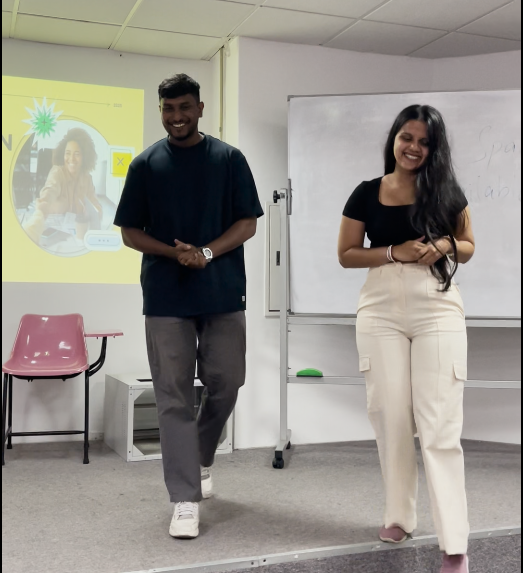
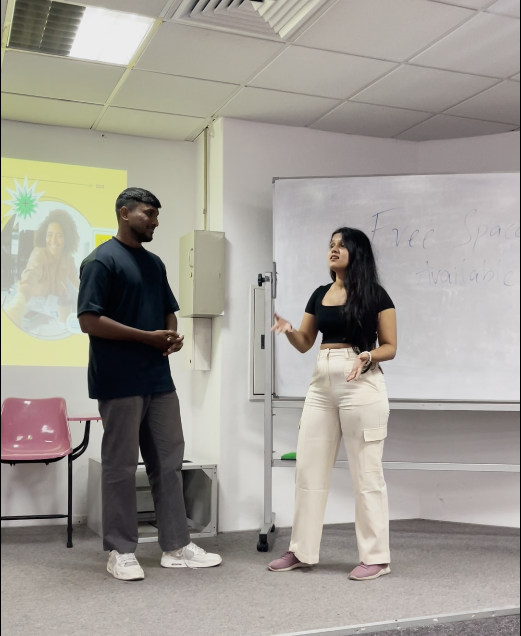
This session focused on developing negotiation skills through an engaging role-play activity. We were divided into groups and tasked with creating a drama about wedding planning negotiations between a couple with conflicting preferences.

Group Activity

Collaborative role-play exercise in small groups

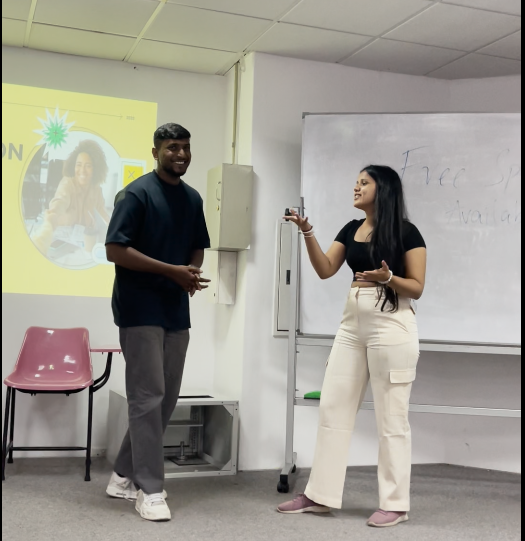
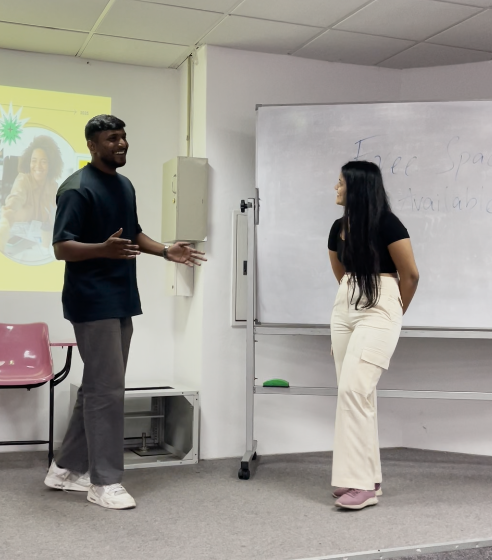
Drama Performance

Creative presentation of negotiation scenarios

Practical Application

Real-world negotiation techniques in action

Wedding Planning Drama Scenario

Our group created a drama featuring a couple planning their wedding with conflicting visions:

Sarah - The Bride

Wants a lavish, extravagant wedding with all traditional elements

  • 500+ guests
  • Five-star venue
  • Designer wedding dress
  • Live band and premium catering

Alex - The Groom

Prefers a simple, intimate wedding focused on savings

  • 50-100 close friends and family
  • Backyard or community hall venue
  • Budget-friendly options
  • Money saved for future plans

Our Wedding Negotiation Drama

Guest List Venue Budget Style

Negotiation Process & Techniques

1

Preparation

Understanding both parties' needs, wants, and limitations before negotiation begins.

Our Approach: We researched average wedding costs and identified non-negotiable items for each character.
2

Opening Statements

Clearly stating positions and underlying interests without being confrontational.

Our Approach: Sarah expressed her dream wedding vision while Alex explained his financial concerns.
3

Exploring Options

Brainstorming creative solutions that address both parties' core needs.

Our Approach: We explored compromises like a medium-sized wedding with selective luxury elements.
4

Bargaining & Compromise

Finding middle ground through give-and-take while maintaining relationship quality.

Our Approach: Sarah agreed to reduce the guest list in exchange for her preferred venue.
5

Agreement & Closure

Finalizing terms that both parties can accept and feel good about.

Our Approach: We reached a balanced solution that incorporated elements important to both characters.

Key Negotiation Strategies Applied

Active Listening

Truly understanding the other party's perspective before responding.

In our drama: Alex listened to Sarah's emotional attachment to certain traditions.

Identifying Interests

Looking beyond stated positions to underlying needs and concerns.

In our drama: We discovered Sarah wanted a memorable experience, not just extravagance.

Creative Problem-Solving

Developing options that create value for both parties.

In our drama: We suggested a destination wedding that felt luxurious but had package deals.

Win-Win Mindset

Focusing on mutual gains rather than one party "winning."

In our drama: Both characters felt their core needs were addressed in the final plan.

Our Drama in Action

Photos from our negotiation skills role-play activity:

Drama Video Recording

Watch the full performance of our negotiation skills drama:

Note: Video shows our group's negotiation role-play performance

Lessons Learned

Emotion Management

Negotiations often involve emotional topics; staying calm is crucial for productive outcomes.

Flexibility

Being willing to adapt initial positions leads to better solutions.

Communication Skills

Clear expression of needs and active listening are fundamental to successful negotiation.

Creative Thinking

Sometimes the best solutions aren't obvious and require innovative thinking.

Personal Reflection

This negotiation skills session was particularly engaging because it combined theoretical concepts with practical application through drama. The wedding planning scenario was relatable and highlighted how emotions can influence negotiations. I learned that successful negotiation isn't about "winning" but about finding solutions that address the core needs of all parties. The role-play format helped me understand how to maintain positive relationships while navigating disagreements. This experience will be valuable in both personal and professional contexts where negotiation skills are essential.

Key Negotiation Principles:

  • Separate the people from the problem - focus on issues, not personalities
  • Focus on interests, not positions - understand why someone wants something
  • Generate multiple options before deciding - creativity expands possibilities
  • Insist on objective criteria - use standards to evaluate options fairly
  • Maintain relationships - negotiations often occur in ongoing relationships

Professional Applications

Salary Negotiations

Applying these skills to discuss compensation and benefits with employers.

Contract Discussions

Negotiating terms with clients, vendors, and business partners.

Team Conflicts

Resolving disagreements and finding consensus in workplace settings.

Project Planning

Balancing resources, timelines, and stakeholder expectations.